

Printing & Materials · Textile Displays
Advertising Fabric Printing: Advantages and Applications in Communication Displays
Advertising fabric printing has become one of the most widely used solutions for communicating at the point of sale, at trade shows and at events: it combines a glare-free finish, excellent colour reproduction and a much lighter weight than rigid displays. In this guide we cover what it is, what real advantages it brings, and which fabric systems shops, brands and event organisers are using today to move on from traditional vinyl or PVC.
If your business needs advertising fabric displays to refresh a shop window, set up a stand or dress a photocall, understanding how fabric printing works first will save you more than one design and budget headache.
In this guide you'll find:
What advertising fabric printing is
Advertising fabric printing consists of transferring a graphic onto a special fabric through dye-sublimation, a process in which the ink turns into gas and bonds directly with the fibres of the material. The result is a graphic embedded in the fabric itself, with no surface ink layer, which avoids glare and gives a matte, uniform finish even at very large formats.
The most common material
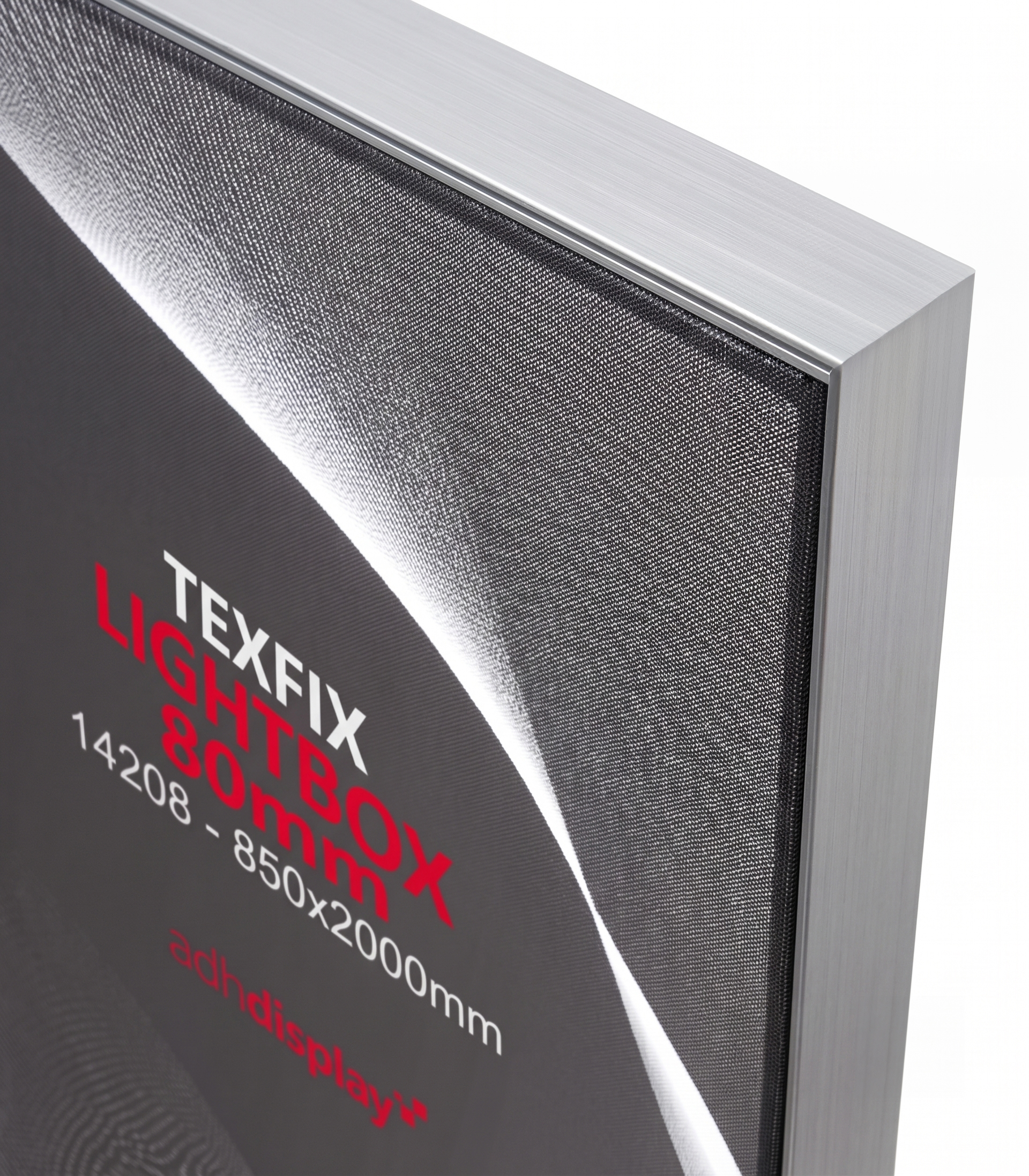
Sublimated polyester fabric
Polyester fabric is, by far, the most widely used material for this type of printing. When stretched over an aluminium frame it lies completely flat, with no wrinkles or bubbles, and reproduces colour with great accuracy. It's also a lightweight, washable fabric that holds up to repeated use, which makes it especially practical for brands that refresh their communication several times a year.
Unlike vinyl or PVC banner material, a fabric graphic can be folded, transported and reinstalled without visible creases, because the fabric itself absorbs the stress of transport. This is one of the reasons it has become the standard at trade shows and events, where the material travels from one venue to another very frequently.
Another important difference compared with printing on rigid materials is the working width: since it's a roll of fabric, graphics several metres wide can be printed without joining panels or leaving visible seams, something that does happen with rigid panels that have a maximum sheet size. This makes fabric printing the natural choice whenever you need to cover façades, large stand backdrops or corporate photocalls where visual continuity is essential.
Advantages of fabric printing over other displays
Compared with self-adhesive vinyl, PVC or traditional banner material, large-format fabric printing offers several advantages that explain why more and more businesses are choosing it as their first option for refreshing their visual communication:
Lightweight and easy to transport: a fabric display weighs a fraction of an equivalent rigid panel, and is carried in a fabric bag instead of a rigid case.
Glare-free finish: the fabric absorbs light instead of reflecting it, which matters especially in shop windows and stands with direct lighting, where a glossy vinyl can be uncomfortable to look at or hard to photograph.
Reusable structure: in most systems (aluminium frames, light boxes, pop-ups) only the fabric graphic is replaced when the campaign changes, without having to buy the whole structure again.
Format versatility: the same material works for indoor dividers, photocall backdrops, outdoor banner flags or backlit graphics, simply by adjusting the fabric weight and type.
Better handling performance: fabric withstands the daily knocks and rubbing of assembly and disassembly far better than a rigid panel, which can chip or get marked at the corners after several uses. For businesses that set up and take down their displays every week (markets, trade shows, pop-up stores), this durability translates directly into fewer replacements and lower costs over the year.
Less storage volume: because it folds into a bag instead of stacking like rigid panels, several fabric graphics take up a fraction of the storage space that the same designs on rigid displays would need — something brands running several active campaigns at once particularly appreciate.
Cashdisplay Tip
If you're going to change your graphic several times a year, invest in a quality structure (aluminium frame or light box) and keep the recurring cost to the fabric graphic itself, which is the part that actually gets replaced with each campaign.
Types of fabric and fabric printing systems
Not all fabric displays work the same way or suit the same use. These are the three most common systems in Cashdisplay's catalogue:
| System | How the graphic is fitted | Recommended use |
|---|---|---|
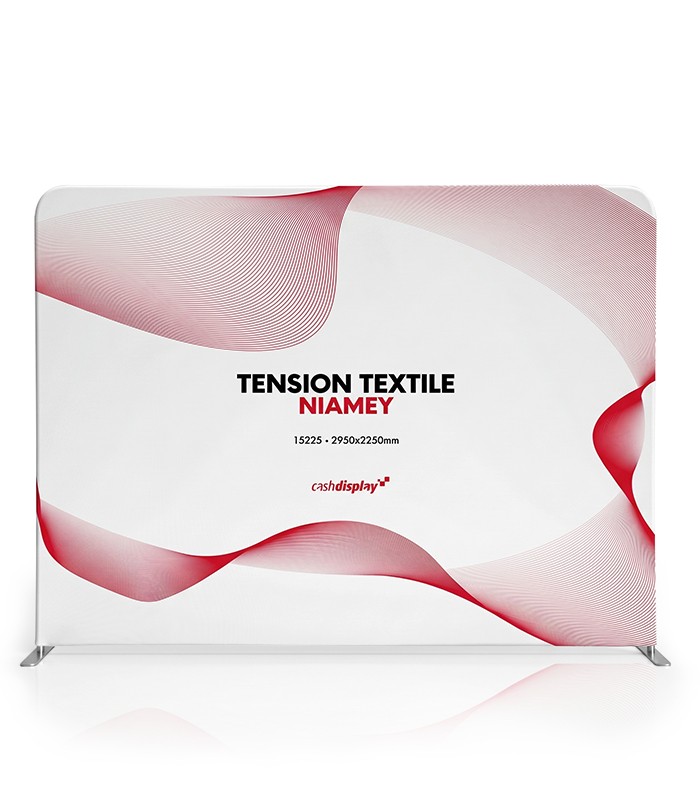
| Tension fabric display (aluminium frame) | Graphic sewn with a zipper, stretched over a curved or straight structure | Indoor, stands, photocalls, space dividers |
| Textile pop-up (velcro) | Fabric panels attached with velcro to a folding pop-up structure | Trade shows and events, very frequent set-up and take-down |
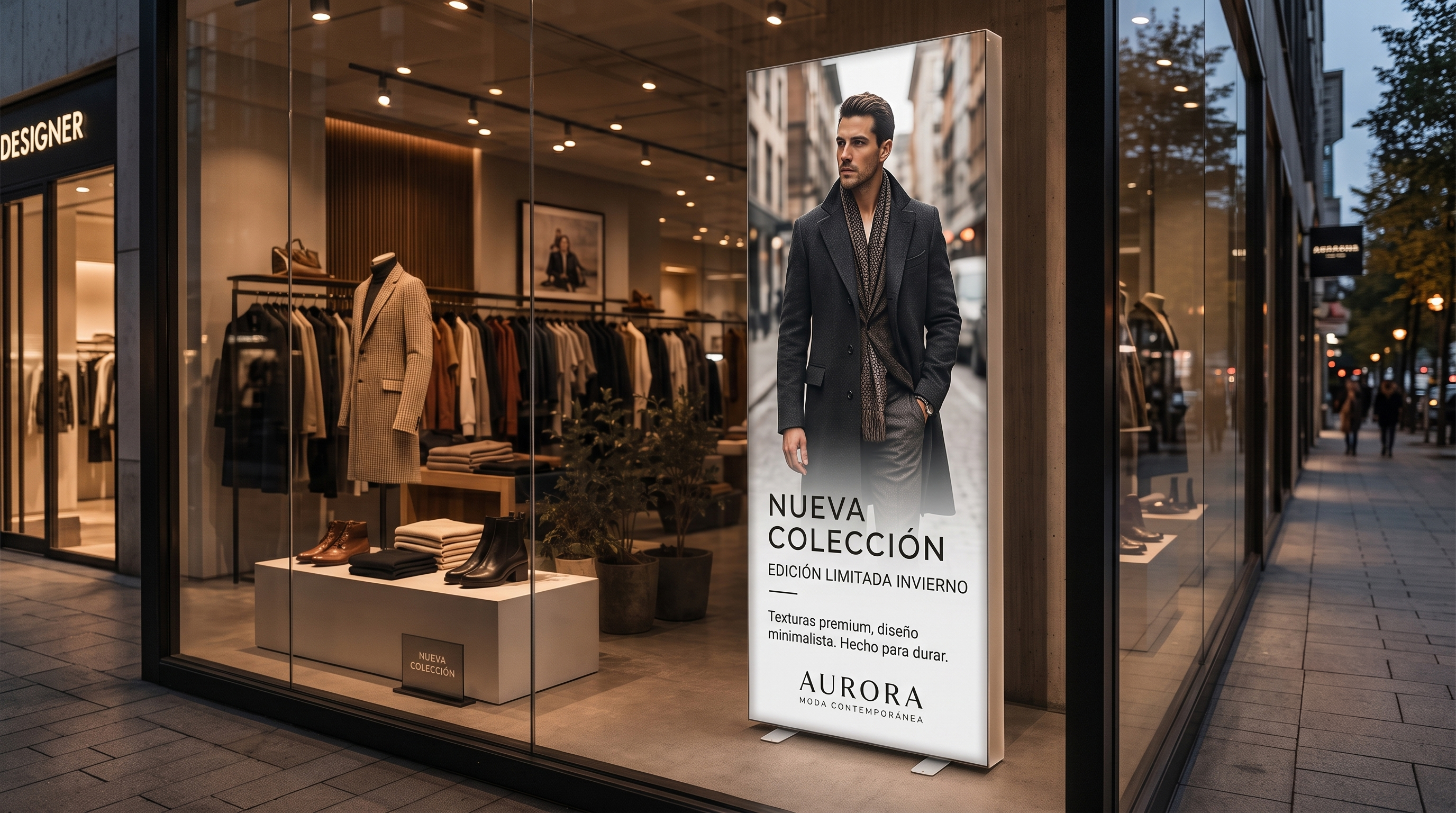
| Textile light box (lightbox with aluminium profile) | Graphic inserted with a silicone strip into a backlit LED profile | Shop windows, fashion stores, restaurants, cinemas |
The choice between one system or another depends mainly on how often you change the graphic and whether you need integrated lighting. A light box system gives far more visual impact in shop windows, but requires a power supply and a graphic specifically prepared to let light through; a tension display or a fabric pop-up, on the other hand, need no electricity and are quicker to set up at a trade show.
Fabric weight also affects the final result. A lighter polyester fabric fits small, curved structures better, while a heavier fabric gives more opacity and is preferable when the graphic is backlit, since it prevents the aluminium profile from casting visible shadows through the material. That's why it's worth always telling the manufacturer whether the graphic will be lit from behind or only seen under ambient light: the same design may need a different fabric depending on the final system.
Quick set-up
Textile pop-up for trade shows and events
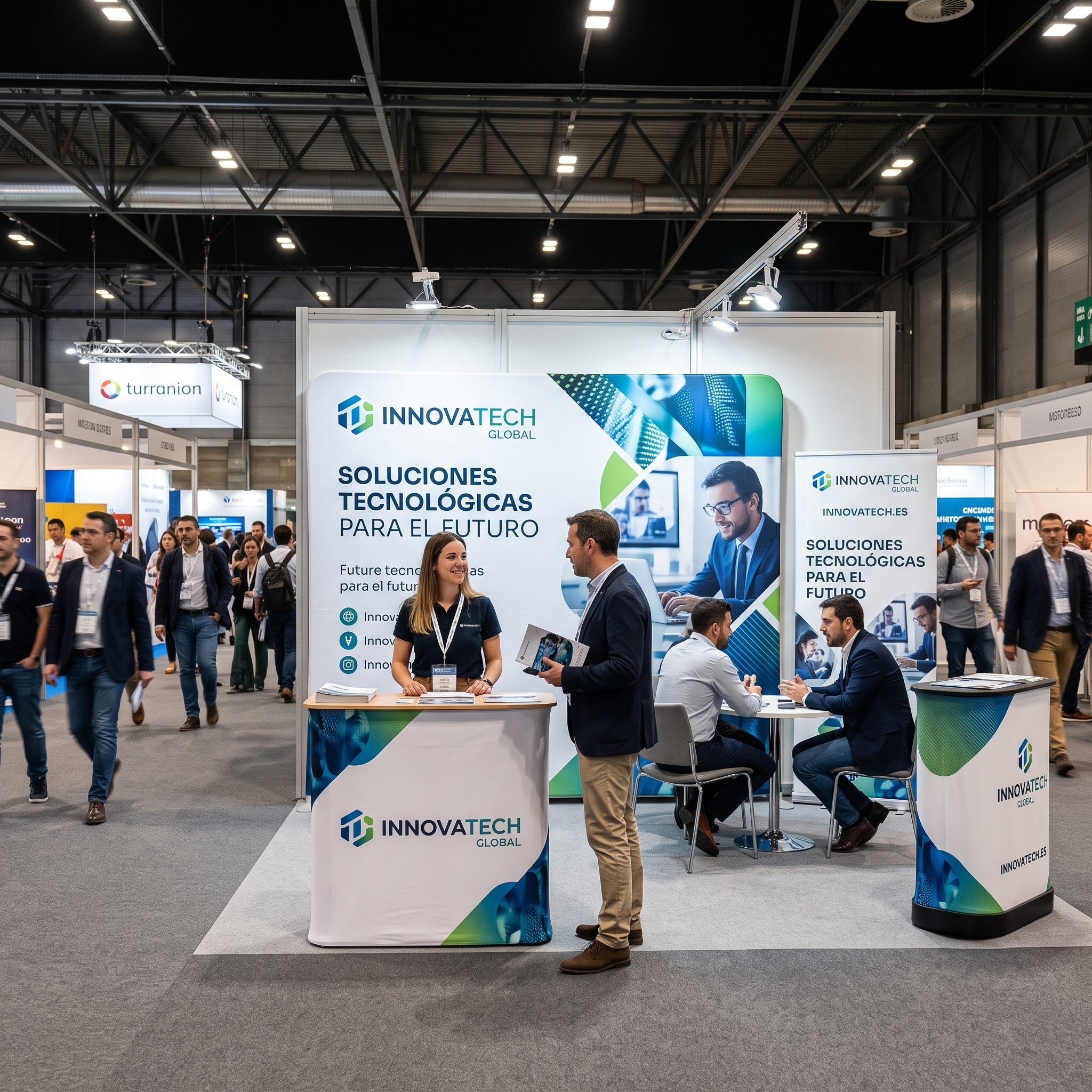
The velcro textile pop-up is the preferred option when the display is set up and taken down many times a year: the fabric panels attach to a folding structure in a few minutes, without tools, and pack away into a compact bag for the next event.
Most common applications
Fabric printing for events and retail is mainly used in three contexts:
Retail and window displays: fashion stores and shops that want a shop window with visual impact and no glare, usually combining a backlit textile light box with the season's graphic. Here, backlighting adds particular value outside business hours, when the window keeps communicating even after the shop is closed and the surrounding stores are in the dark.
Trade shows and events: stands, photocalls and space dividers that travel from one show to another and need to be set up quickly, with no creases or knocks to the material. Here the main criterion isn't so much the finish as the logistics: how much it weighs, how much space it takes up folded, and how long it takes to set up, since the team often has only an hour or two to get the stand ready before doors open.
Hospitality and commercial spaces: room dividers, backdrop decoration and communication elements in restaurants, cinemas or event spaces, where fabric gives a more elegant finish than a rigid panel and blends better with the ambient lighting typical of these venues, without creating distracting glare in photos or for the customer experience.
A good fabric display doesn't feel like a "sign": it blends into the space, and that's exactly what retail brands and event organisers are looking for.
Cashdisplay's advertising fabric displays
Here are some of the fabric printing systems available in Cashdisplay's catalogue, designed for different needs:
Niamey Textile Display
Curved aluminium structure with tension fabric graphic, ideal as a divider or stand backdrop.
View product
Surat Textile Pop Up with Velcro
Velcro fabric panel on a folding structure, designed for frequent set-up and take-down.
View product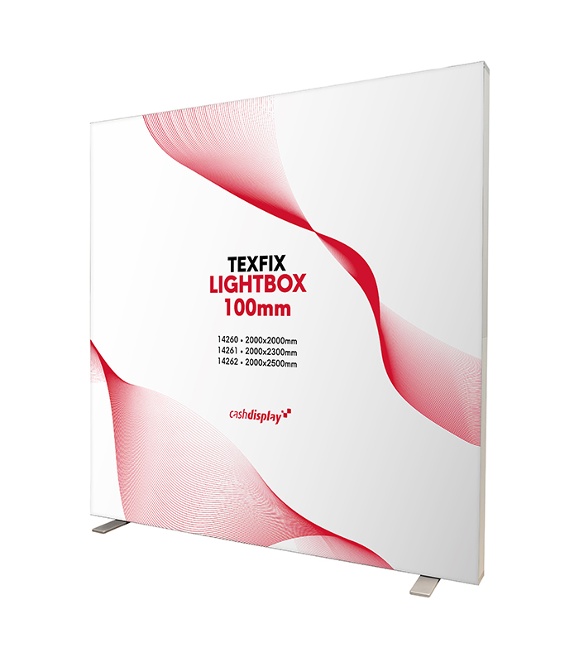
Pro LED Light Box 100mm
Backlit textile light box with integrated LED, for shop windows and commercial spaces.
View productHow to choose the right system (and common mistakes)
Before settling on a specific fabric display, it's worth answering three questions: how often will you change the graphic? does the display stay fixed in one location or travel from event to event? do you need integrated lighting, or is ambient light enough?
The most common mistakes when ordering advertising fabric printing are sending the file at low resolution (fabric requires the same image quality as any other large format), leaving no safety margin for sewing or stretching, and choosing a light box without first checking whether there's a power outlet near the point of sale. Reviewing the manufacturer's printing guidelines before sending the final file avoids most of these issues.
Budget also plays into the decision: a tension fabric display or a velcro pop-up usually has a lower entry cost than a light box with an integrated LED system, since the latter includes electronic components and a more complex aluminium structure. If the goal is to trial a new format with a moderate investment, it makes sense to start with a tension display or a fabric pop-up; if the shop window is a fixed, strategic point of sale, a light box tends to pay for itself thanks to its greater visual impact and the fact that the graphic can be changed without touching the structure.
Frequently asked questions about advertising fabric printing
We answer the most common questions about materials, systems and uses of fabric printing.
What's the difference between fabric printing and vinyl or banner material?
Fabric printing is bonded inside the fibres of the material through dye-sublimation, with no surface ink layer, so it doesn't create glare and the material is lighter and more flexible than vinyl or PVC banner material.
Can a fabric graphic be washed or reused?
Yes, polyester fabric can be washed and reused across several campaigns if the design doesn't change, although it's best to follow the manufacturer's cleaning instructions to preserve the colour.
Which fabric system is best for a one-off trade show or event?
For events with frequent set-up and take-down, a velcro textile pop-up is the most practical option: it needs no tools or electricity and packs into a compact bag.
Do I need electricity for a textile light box?
Yes, lightbox-type systems include an LED module built into the aluminium profile and need a power connection near the installation point.
What resolution does a file need for large-format fabric printing?
As with any large-format display, it's standard to work with vector files or a resolution suited to the expected viewing distance; always check the specific printing guidelines for each product before sending the final file.
Is fabric printing suitable for outdoor use?
It depends on the system: tension displays and textile light boxes are usually designed for indoor use, while for outdoor use it's more common to turn to banner flags and specific fabric displays built to withstand wind and moisture; always check the indoor/outdoor use specification for each product before installing it.
Advertising fabric printing is no longer a niche "premium" alternative: it has become the default choice for retail brands, event organisers and hospitality businesses looking for an elegant, lightweight finish that's easy to refresh. Choosing the right system (tension display, pop-up or light box) based on how often it's used and where it's installed is what makes the difference between a display used once and one that stays with the brand for years.
Find your advertising fabric display
Discover tension displays, textile pop-ups and backlit light boxes for retail, trade shows and events.
Archived in: Printing & Materials


