

When we talk about paper sizes, we are referring to the standard dimensions of paper used in different areas of our daily lives, from corporate environments to creative projects. These dimensions are regulated by international standards, such as ISO 216, and offer the advantage of standardisation, making compatibility and efficiency easier in different contexts. Understanding the differences between paper sizes is essential to optimise resources and guarantee professional results in terms of printing, design and storage. By standardising measurements, problems related to equipment compatibility are reduced and uniform communication in global projects is ensured. Shall we tell you more?
Table of contents
- What are paper sizes and why are they important?
- Paper sizes according to the ISO 216 standard: A Series
- All A series paper sizes and their characteristics
- Paper sizes in the B and C series
- Most commonly used paper sizes in America: Letter, Legal and Tabloid
- Everything you need to know about paper sizes
What are paper sizes and why are they important?
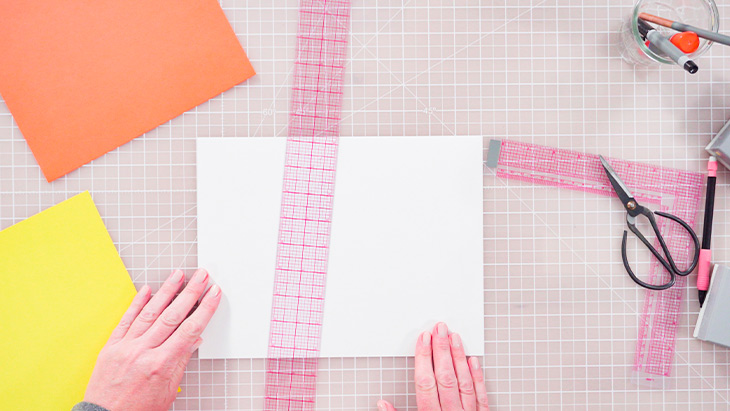
Paper sizes are defined standards that specify paper dimensions in a structured and uniform way. This system, widely adopted internationally, is mainly governed by the ISO 216 standard, which classifies sizes into three main series: A, B and C. These categories are designed to offer a practical solution for the production and use of paper.
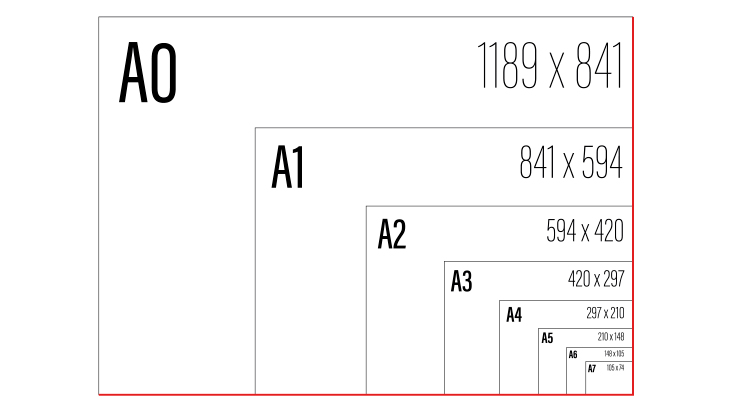
The underlying concept of the A series, for example, is an ingenious formula that ensures each size is exactly half of the previous one, preserving a constant aspect ratio (√2:1). This feature is particularly useful in contexts where documents need to be resized without altering the original design, such as when printing brochures, folding sheets or scanning documents.
Standardisation in paper sizes is fundamental for productivity and sustainability. Without these standards, offices and companies would face complications when handling documents, printing materials or filing information. The A4 paper size, for example, has become the reference size in professional and academic settings thanks to its practicality.
In addition, these standards also help minimise paper waste, as uniform proportions make more precise and efficient cuts easier during production. Understanding and using the normal paper size properly is therefore a key tool in the modernisation of administrative and creative processes.
Paper sizes according to the ISO 216 standard: A Series
The A series is the most recognised and widely used globally thanks to its versatility. Designed to meet diverse needs, this series ranges from extremely large formats, such as A0, to the smallest, such as A10. Its mathematical formula ensures that each size keeps the exact proportion, making document handling and storage easier.
A4 paper measurements
The A4 size, with precise measurements of 210 mm x 297 mm, is the most common option in offices, schools and homes. This A4 paper size is ideal for letters, academic reports and legal documentation, standing out for its balance between usable space and ease of handling. Its aspect ratio also makes it an excellent choice for graphic design and personalised stationery.
A3 paper size
A3 measures 297 mm x 420 mm and is mainly used in areas where more space is needed, such as architectural plans, technical diagrams and promotional posters. This format is especially valued by designers and artists who require a large surface for detailed work.
All A series paper sizes and their characteristics
- A0: With dimensions of 841 mm x 1189 mm, it is the largest size in the series. It is ideal for large-format plans, detailed maps and large posters.
- A1: It measures 594 mm x 841 mm and is used in technical designs and professional signage.
- A2: At 420 mm x 594 mm, it is ideal for graphics and visual presentations.
- A3: At 297 mm x 420 mm, it is a versatile format for small posters, technical plans, graphic design and school projects.
- A4: This is the most widely used standard size (210 mm x 297 mm), ideal for office tasks, documents, letters and everyday uses.
- A5: Compact and portable, at 148 mm x 210 mm, it is perfect for diaries, flyers, small notebooks and manuals.
- A6: It measures 105 mm x 148 mm and is common in postcards and small notes.
- A7: With a reduced size of 74 mm x 105 mm, it is ideal for entry tickets, receipts and small-format labels.
- A8: Dimensions of 52 mm x 74 mm, perfect for business cards
- A9: At 37 mm x 52 mm, it is used for labels and coupons.
- A10: The smallest of all, it measures 26 mm x 37 mm and is used for ultra-compact purposes, such as identifiers.
Below, we leave you a table with all the detailed information about paper measurements in different metric systems, so you can check it and have everything summarised whenever you need it:
| Format | Measurements (mm) | Measurements (cm) | Measurements (inches) | Measurements (pixels at 300 dpi) |
|---|---|---|---|---|
| A0 | 841 x 1189 | 84.1 x 118.9 | 33.11 x 46.81 | 9933 x 14043 |
| A1 | 594 x 841 | 59.4 x 84.1 | 23.39 x 33.11 | 7016 x 9933 |
| A2 | 420 x 594 | 42.0 x 59.4 | 16.54 x 23.39 | 4961 x 7016 |
| A3 | 297 x 420 | 29.7 x 42.0 | 11.69 x 16.54 | 3508 x 4961 |
| A4 | 210 x 297 | 21.0 x 29.7 | 8.27 x 11.69 | 2480 x 3508 |
| A5 | 148 x 210 | 14.8 x 21.0 | 5.83 x 8.27 | 1748 x 2480 |
| A6 | 105 x 148 | 10.5 x 14.8 | 4.13 x 5.83 | 1240 x 1748 |
| A7 | 74 x 105 | 7.4 x 10.5 | 2.91 x 4.13 | 874 x 1240 |
| A8 | 52 x 74 | 5.2 x 7.4 | 2.05 x 2.91 | 614 x 874 |
| A9 | 37 x 52 | 3.7 x 5.2 | 1.46 x 2.05 | 437 x 614 |
| A10 | 26 x 37 | 2.6 x 3.7 | 1.02 x 1.46 | 307 x 437 |
Keep in mind that these measurements are shown in this order: “Width x Height”. In addition, we detail the paper sizes in different metric systems because millimetres are the standard in the paper industry, centimetres are the main derivative of the metric system, inches are widely used in regions such as North America, and pixel measurements are calculated in relation to 300 dpi, so you can obtain a high-quality print. This variety makes it possible to cover any need, from huge projects to the smallest tasks.
Paper sizes in the B and C series
The B and C series complement the A series by offering solutions adapted to specific printing and design needs. While the A series is the most widely used in everyday life, the B and C series expand the possibilities in terms of intermediate formats and specific applications, such as large-format prints or envelopes designed for standard documents
B Series
The B series offers sizes that are approximately 25% larger than those of the corresponding A series, making them ideal for applications that require an intermediate format or a wider visual space. For example, B0, with its generous dimensions, is perfect for large-format prints such as event posters, detailed maps and architectural plans. B5, on the other hand, is widely used in books and magazines thanks to its balanced size, which allows for a comfortable and attractive visual experience.
Below is a table with all the B series sizes:
| Format | Measurements (mm) | Measurements (cm) | Measurements (inches) | Measurements (pixels at 300 dpi) |
|---|---|---|---|---|
| B0 | 1000 x 1414 | 100.0 x 141.4 | 39.37 x 55.67 | 11811 x 16614 |
| B1 | 707 x 1000 | 70.7 x 100.0 | 27.83 x 39.37 | 8346 x 11811 |
| B2 | 500 x 707 | 50.0 x 70.7 | 19.69 x 27.83 | 5910 x 8346 |
| B3 | 353 x 500 | 35.3 x 50.0 | 13.90 x 19.69 | 4173 x 5910 |
| B4 | 250 x 353 | 25.0 x 35.3 | 9.84 x 13.90 | 2953 x 4173 |
| B5 | 176 x 250 | 17.6 x 25.0 | 6.93 x 9.84 | 2079 x 2953 |
| B6 | 125 x 176 | 12.5 x 17.6 | 4.92 x 6.93 | 1476 x 2079 |
| B7 | 88 x 125 | 8.8 x 12.5 | 3.46 x 4.92 | 1039 x 1476 |
| B8 | 62 x 88 | 6.2 x 8.8 | 2.44 x 3.46 | 732 x 1039 |
| B9 | 44 x 62 | 4.4 x 6.2 | 1.73 x 2.44 | 516 x 732 |
| B10 | 31 x 44 | 3.1 x 4.4 | 1.22 x 1.73 | 366 x 516 |
C Series
The C series specialises in formats designed to hold A series documents. This approach makes envelopes and wrappers in this series essential in offices and for formal correspondence. For example, C4 is designed to store A4 sheets without needing to fold them, ensuring a professional and clean appearance when presenting documents.
In addition, smaller formats, such as C6, are ideal for personal letters or invitations, while medium sizes, such as C5, allow A4 sheets to be folded in half, optimising space without compromising content quality.
The following table shows the paper sizes of the C series:
| Format | Measurements (mm) | Measurements (cm) | Measurements (inches) | Measurements (pixels at 300 dpi) |
|---|---|---|---|---|
| C0 | 917 x 1297 | 91.7 x 129.7 | 36.10 x 51.06 | 10831 x 15351 |
| C1 | 648 x 917 | 64.8 x 91.7 | 25.51 x 36.10 | 7656 x 10831 |
| C2 | 458 x 648 | 45.8 x 64.8 | 18.03 x 25.51 | 5413 x 7656 |
| C3 | 324 x 458 | 32.4 x 45.8 | 12.76 x 18.03 | 3828 x 5413 |
| C4 | 229 x 324 | 22.9 x 32.4 | 9.02 x 12.76 | 2701 x 3828 |
| C5 | 162 x 229 | 16.2 x 22.9 | 6.38 x 9.02 | 1913 x 2701 |
| C6 | 114 x 162 | 11.4 x 16.2 | 4.49 x 6.38 | 1346 x 1913 |
| C7 | 81 x 114 | 8.1 x 11.4 | 3.19 x 4.49 | 958 x 1346 |
| C8 | 57 x 81 | 5.7 x 8.1 | 2.24 x 3.19 | 672 x 958 |
| C9 | 40 x 57 | 4.0 x 5.7 | 1.57 x 2.24 | 472 x 672 |
| C10 | 28 x 40 | 2.8 x 4.0 | 1.10 x 1.57 | 331 x 472 |
Most commonly used paper sizes in America: Letter, Legal and Tabloid
In America, the most common paper sizes, different from the ISO standard, are Letter, Legal and Tabloid. Each one has specific uses: Letter (8.5 x 11 inches) is the standard in offices and homes, ideal for letters and reports; Legal (8.5 x 14 inches) is used in legal documents, thanks to its additional length that makes it easier to include more text; and Tabloid (11 x 17 inches) is popular in graphic design and visual publications, thanks to its wide space for graphics and diagrams.
Everything you need to know about paper sizes
Ultimately, understanding the different paper sizes and their applications makes it easier to choose the right one for each project. Choosing the correct format not only optimises presentation, but also ensures compatibility with regional and technical requirements.
At Cashdisplay, we know how important it is to have materials that adapt to your needs. That is why we offer a wide range of printing and advertising solutions that guarantee maximum quality and versatility, whether you need standard or customised formats. Discover everything we can do for your projects!


