

In recent years, vinyl has become very popular thanks to its versatility and its ability to adapt to different uses. From commercial signage to clothing customisation, this material offers a wide range of possibilities, making it a valuable resource in advertising, decoration and design. In this guide, we will discover the different types of vinyl available, their characteristics, recommended applications and tips for choosing the most suitable one for each project. Let’s get started!
Table of contents
- Types of vinyl: monomeric vs. polymeric
- Type of vinyl: Cut vinyl
- Type of vinyl: Digital printing vinyl
- Type of vinyl: Textile vinyl
- Type of vinyl: Electrostatic vinyl
- Type of vinyl: High-resistance or cast vinyl
- How to choose the right type of vinyl for your project?
- Tips for installing and removing different types of vinyl
- Now it’s your turn: Choose the ideal type of vinyl for your project
Types of vinyl: monomeric vs. polymeric
Monomeric vinyl
Monomeric vinyl is one of the materials most commonly used in short-term applications, especially indoors. This type of vinyl is made up of large molecules, which gives it a more rigid and less flexible structure. Although this rigidity can limit its ability to adapt to curved or irregular surfaces, it is ideal for temporary or decorative projects, such as indoor posters and signs.
This vinyl is affordable, easy to handle and widely available on the market. However, it is important to bear in mind that it does not withstand extreme weather conditions well.
Polymeric vinyl
Unlike monomeric vinyl, polymeric vinyl is a type of vinyl made with smaller molecules and a more flexible structure. This allows it to adapt better to curved and complex surfaces, making it the ideal choice for projects that require a high-quality finish and greater outdoor durability. This type of vinyl is widely used in vehicle lettering, permanent signage and outdoor applications that require resistance to weather changes and UV radiation.
Although polymeric vinyl usually has a higher price than monomeric vinyl, its durability and adaptability make it a profitable long-term investment.
Type of vinyl: Cut vinyl
Characteristics and advantages of cut vinyl
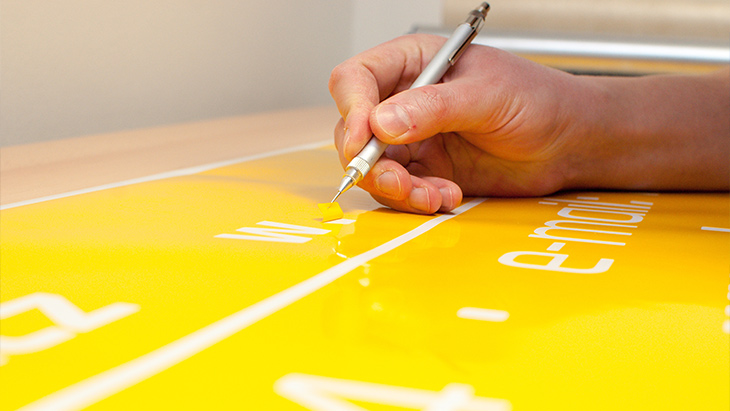
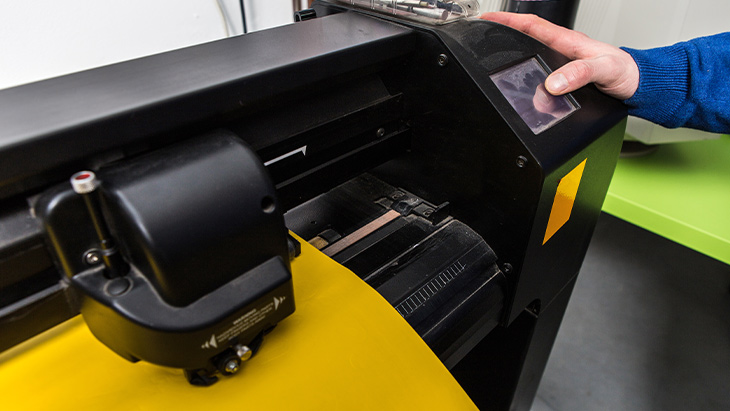
Cut vinyl is one of the favourites for those looking to customise designs, as it allows precise and detailed cuts in a wide variety of colours. This type of vinyl does not require printing, as it is cut directly into the desired shape, making it ideal for logos, lettering and simple design figures. Are you looking for something resistant and adaptable for outdoor use? Cut vinyl is highly water-resistant and can remain in good condition for years, making it a durable and low-maintenance option.
Applications in signage and decoration
Cut vinyl has multiple applications in business signage, interior decoration and item customisation. It is a type of window vinyl used to display logos, shop or office signs, and it is also commonly used to customise products such as glasses, bottles and other promotional items.
Type of vinyl: Digital printing vinyl
How printing vinyl works and its characteristics
Digital printing vinyl has revolutionised the way advertising and decorative materials are designed and produced. This vinyl allows direct printing on its surface, making it easier to create complex designs with a wide variety of colours and visual details. Using a specialised printer, photographs, illustrations and customised graphics can be printed while preserving their quality and detail.
Advertising and decoration
Thanks to its ability to capture details and intense colours, digital printing vinyl is widely used in billboards, large-format posters and outdoor banners. In addition, it is a type of wall vinyl used in decoration and is very common in interior design projects.
Type of vinyl: Textile vinyl
Types of textile vinyl and the differences between them
Textile vinyl is an excellent option for customising garments and fashion products. There are several types of textile vinyl, such as heat transfer vinyl, which adheres to fabric using heat, flocked vinyl, which provides a velvety finish, and metallic vinyl, which offers a shiny effect. Each type of textile vinyl has its own aesthetic and applications, allowing fashion designers and entrepreneurs to create unique and customised products.
Fashion and clothing customisation
Would you like to create your own clothing? Clothing customisation with textile vinyl is a growing trend, allowing you to create unique designs on T-shirts, caps, backpacks and other accessories. This type of vinyl is easy to apply and highly durable, remaining in good condition even after several washes, as long as the care instructions are followed.
Type of vinyl: Electrostatic vinyl
Electrostatic vinyl adheres to smooth surfaces without the need for adhesive, thanks to the static charge of its material. This type of vinyl is ideal for temporary applications, as it can be applied and removed easily without leaving residue. It is also reusable, making it an eco-friendly and economical option. Its resistance to water and UV rays makes it suitable for both indoor and outdoor use, especially for window signage and advertising campaigns on shop windows.
Applications and advantages of electrostatic vinyl
Electrostatic vinyl is widely used in shops for seasonal promotions, allowing quick installation without the need for additional tools. Due to its ability to adhere to surfaces such as glass, metal and plastics, this type of vinyl is ideal for creating temporary graphics on vehicles and shop windows. It is also perfect for events and trade fairs, where ease of installation and removal is crucial. Its reusability makes it a cost-effective option for companies that change their messages frequently.
Type of vinyl: High-resistance or cast vinyl
This type of vinyl is manufactured through a process in which the material is cast, creating a flexible and durable structure. This type of vinyl is resistant to deformation and has excellent adhesion, even on irregular and curved surfaces. Due to its characteristics, it is used in car lettering, industrial machinery and boats, offering additional protection against scratches and damage caused by sun exposure. It is ideal for long-lasting graphics, withstanding adverse weather conditions without fading or cracking.
Characteristics of high-resistance vinyl
The high-resistance or cast type of vinyl is known for its durability and flexibility, being able to withstand extreme temperatures ranging from -40°C to 90°C without losing its adhesion. This makes it ideal for applications in industrial and automotive environments where exposure to heat and chemicals is common. In addition, its greater thickness (between 50 and 100 microns) provides an effective barrier against scratches and abrasions.

How to choose the right type of vinyl for your project?
Selecting the right vinyl can make all the difference to the success and durability of your project. Below, we detail several criteria and recommendations that will help you make the best decision, based on the type of application, the environment and the technical requirements.
1. Define the purpose of the project and the expected usage time
- How long will it be installed?: If the project is temporary or seasonal, such as promotions, shop windows or event signage, monomeric vinyl may be enough. For permanent applications, especially outdoors, polymeric or cast vinyl is more suitable.
- Environmental requirements: Outdoors, vinyl will be exposed to changing weather conditions, which requires a type of vinyl that is more resistant than usual. High-resistance or cast vinyl is often the best choice, as it tolerates all kinds of harsh weather without wearing out.
2. Type of surface and design complexity
- Flat or curved surfaces: If your project includes irregular surfaces, such as vehicles or machinery, cast vinyl, with its flexibility and adaptability, is ideal. On the other hand, on flat and rigid surfaces, such as windows and smooth walls, cut vinyl or digital printing vinyl can work well without the need for greater flexibility.
- Design details: For projects that require precision, such as logos or fine lettering, cut vinyl is ideal thanks to its customisation capacity and quality finish. On the other hand, if your design includes complex graphics or photographs, the type of vinyl used for digital printing will allow high fidelity in colours and details.
3. Aesthetic elements: Finish and visual effects
- Matte, gloss or special finish? The finish of the different types of vinyl affects both the appearance and the perception of the product. A matte finish is less reflective and may be more suitable for environments with intense light, while a glossy finish stands out in less illuminated environments and provides a polished look. Special finishes, such as metallic or mirror-effect vinyl, can add a distinctive touch to projects with an innovative design.
- Vinyls with textures and additional effects: If your goal is to attract attention or differentiate the design, you should consider vinyls with textures or effects (metallic, flocked or holographic) to stand out in commercial spaces or fashion projects.
Tips for installing and removing different types of vinyl
Installing and removing vinyl can be a task for professionals, especially if we want to avoid bubbles, wrinkles or any damage to surfaces, but don’t worry! With the right technique and tools, you can do it easily.
How to install vinyl without bubbles? We explain it step by step
No bubbles, no wrinkles! To achieve a perfect installation, it is essential to spend time preparing the surface and to follow the process carefully. Below, we explain the ideal step-by-step process for installing any type of vinyl:
- Surface preparation: Before applying the vinyl, make sure the surface is completely clean and dry. If possible, use isopropyl alcohol to remove grease, dust and any residue that could interfere with adhesion. Let it dry for a few minutes before continuing.
- Alignment and marking: Place the vinyl in the desired position and use adhesive tape to hold it temporarily. You can use a spirit level or tape measure to ensure that the vinyl is straight and properly aligned.
- Vinyl application: Once aligned, start by partially removing the backing paper, exposing only a small section of the adhesive. Gently press this section onto the surface, using a squeegee or plastic card to adhere the vinyl without bubbles.
- Progressive removal of the backing paper: Gradually remove the protective paper while applying even pressure with the squeegee from the centre towards the edges. This helps prevent air bubbles from forming.
- Removal of remaining bubbles: If you notice any bubbles once the vinyl has been applied, use the squeegee to smooth the area. For larger bubbles, a useful tip for any type of vinyl is that you can gently pierce them with a needle and press to release the air.
How to remove different types of vinyl without damaging surfaces
- Heating the vinyl: If the vinyl has been on the surface for a long time, the adhesive may be strongly attached. Use a hair dryer or heat gun at a low temperature and pass it gently over the vinyl to soften the adhesive.
- Peeling the vinyl off slowly: Start by lifting one edge of the vinyl with a plastic spatula (avoid metal objects that could damage the surface). Once you have lifted an edge, gently pull the vinyl towards you, maintaining an angle of approximately 45 degrees.
- Cleaning adhesive residue: In some cases, some adhesive may remain on the surface after removing the vinyl. Use isopropyl alcohol or an adhesive remover product to remove any sticky residue.
Now it’s your turn: Choose the ideal type of vinyl for your project
As you have seen, each type has its own qualities, advantages and perfect applications, and choosing the right one can make all the difference in your project. The magic of vinyl is precisely that: there is an ideal one for every idea, whether it is decorating a wall, customising a garment or adding a special touch to a shop window.
Do not forget that choosing the right type of vinyl is just as important as installing and caring for it so that it looks good and lasts as long as you expect.


