

In a market saturated with brands, products and messages, capturing the customer’s attention at the point of sale is a constant challenge. This is where visual merchandising comes into play, a key strategy in modern marketing that transforms commercial spaces into memorable experiences. But what is visual merchandising and why has it become an essential tool for retail? In this article, we explain it in depth, with examples and key points to apply it successfully.
Table of contents
- What is visual merchandising?
- Origins and evolution of visual merchandising
- Key elements of visual merchandising
- What is the role of visual merchandising in marketing?
- Examples of successful visual merchandising
- The role of the visual merchandiser
- Benefits of visual merchandising for retail
- Visual merchandising in the digital environment
- How to implement an effective visual merchandising strategy?
- Tools and supports for visual merchandising
What is visual merchandising?
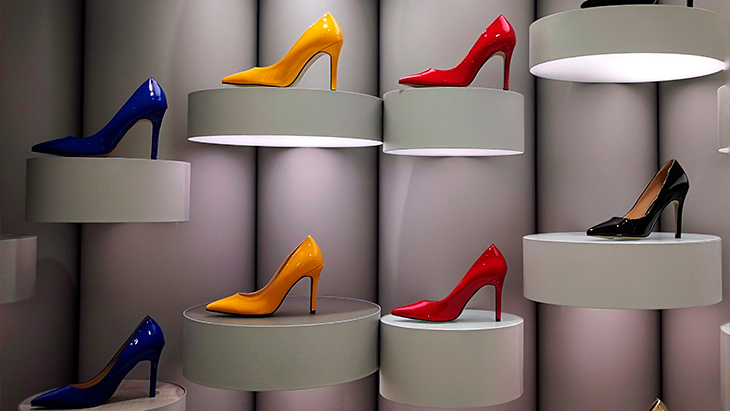
Visual merchandising is the set of techniques used to present products in a sales space strategically, with the aim of attracting customers, facilitating purchases and boosting sales. This includes everything from the organisation of shelves and display windows to lighting, colours, background music and signage.
In other words, if you are wondering what visual merchandising is, you could say it is the art of guiding the customer through the store using an attractive and functional design that increases the desire to buy. Its purpose is not only decorative, but also commercial and psychological.
Visual merchandising seeks to create a complete sensory experience that reinforces brand positioning and generates an environment that encourages purchasing decisions. Through a carefully designed presentation of the product and its surroundings, it influences consumer perception, highlighting key attributes such as quality, exclusivity or convenience.
In addition, this discipline adapts to different business formats, from physical stores to trade fair stands, shop windows or pop-up spaces. Good visual merchandising design can increase the customer’s dwell time, improve product rotation and favour brand recognition. It is therefore an essential tool for the retail, fashion, cosmetics sectors and any commercial environment where image plays a leading role.
Origins and evolution of visual merchandising
Although its principles date back to the department stores of the 19th century, the concept of visual merchandising as a professionalised strategy has evolved considerably with the rise of neuromarketing, technology and e-commerce. Today, the goal is not only to display products, but to create an experience consistent with brand values.
Key elements of visual merchandising
When it comes to understanding what retail visual merchandising is, it is essential to know the elements that make it up:
- Space layout: the customer journey should be fluid, intuitive and encourage product discovery.
- Product display: use display stands, displays and suitable furniture to highlight what is most relevant.
- Lighting: highlights strategic areas and creates emotional atmospheres.
- Colour and shape: colours influence emotions and purchasing decisions. Visual harmony is key.
- Posters and signage: they guide, inform and reinforce commercial messages.
- Display windows and shop windows: they are the first point of visual contact with the customer.
What is the role of visual merchandising in marketing?
Visual merchandising is a key strategic tool within point-of-sale marketing, as it acts as a direct communication channel between the brand and the consumer. It is not limited to displaying products, but builds a visual narrative that conveys brand values, positions its products and creates an emotionally appealing environment that influences purchasing behaviour.
A well-designed visual presentation can capture attention from the very first moment, invite the customer to explore the space, highlight promotions or launches, and make the product easier to understand. In this sense, visual merchandising turns the sales space into a commercial stage that stimulates the senses and reinforces purchase intention.
In especially competitive sectors such as fashion, technology or luxury, visual merchandising plays a differentiating role. Through resources such as strategic lighting, premium presentation materials, personalised signage and sensory elements, it is possible to build memorable brand experiences that connect emotionally with the customer.
In addition, a well-executed visual merchandising strategy can increase the consumer’s dwell time in the store, encourage unplanned purchases, raise the average ticket value and promote loyalty. In short, it is an essential pillar of experiential marketing that transforms the physical space into an active and effective sales tool.
Examples of successful visual merchandising
To better understand what visual merchandising is, let us analyse some notable applications:
- Fashion retail: brands such as Zara or H&M constantly renew their shop windows and internal layout to adapt to seasons and collections, guiding customers intuitively towards key products.
- Electronics: Apple uses interactive tables, focused lighting and a clean layout that invites customers to try the products.
- Supermarkets: the order of the aisles, the placement of offers and the use of promotional islands follow a logic designed to maximise impulse purchases.
The role of the visual merchandiser
Behind every striking shop window, every intuitive store route and every visual detail that guides the consumer, there is the work of a visual merchandiser. This professional is responsible for designing, planning and executing the product presentation strategy at the point of sale, integrating aesthetic, commercial and psychological elements.
But what exactly is a visual merchandiser? It is the specialist who transforms a commercial space into a stimulating and functional environment. To do this, they combine creativity with in-depth knowledge of marketing, consumer trends, purchasing behaviour and branding. From the selection of colours and materials to the arrangement of furniture or shop window design, their goal is to turn the physical environment into an active sales tool, capable of directly influencing commercial results.
In addition, a good visual merchandiser works closely with the marketing, product and sales departments to ensure that the visual strategy is aligned with the brand’s overall objectives.
Benefits of visual merchandising for retail
Applying visual merchandising professionally and strategically in the retail sector brings multiple advantages, both in terms of image and commercial performance:
- Increases product visibility: it helps the most relevant or profitable items quickly capture the customer’s attention.
- Improves the shopping experience: it creates pleasant, intuitive and comfortable environments that invite customers to explore, generating a positive point-of-sale experience.
- Reinforces brand identity: it maintains visual and conceptual coherence across all spaces, strengthening the company’s positioning and values.
- Boosts cross-selling: through a strategic arrangement of complementary products, it encourages the additional purchase of related items.
- Optimises commercial space: it makes the most of every square metre, organising the layout efficiently and profitably.
- Enhances visual storytelling: every corner can tell a story, convey an emotion or contextualise the use of a product, strengthening the emotional bond with the customer.
Visual merchandising in the digital environment
Although visual merchandising has traditionally been associated with the design of physical spaces, its influence has naturally expanded into the digital environment. In e-commerce, the principles of visual merchandising remain just as relevant, as they help capture the user’s attention, facilitate navigation and increase conversion.
In an online store, the visual hierarchy, that is, the order in which content is presented, plays a fundamental role. From the arrangement of products on the home page to the way categories are structured or promotions are highlighted, every element must be designed to guide the visitor in an intuitive and persuasive way.
Other resources such as high-quality product photography, promotional banners, corporate colours, clear typography or interactive effects act as digital equivalents of the physical shop window. In fact, a correct visual presentation in e-commerce not only improves the site’s aesthetics, but also increases dwell time, reduces the bounce rate and facilitates purchasing decisions.
In short, digital visual merchandising seeks the same goal as its traditional version: to attract, excite and sell. The difference lies in the support, but the essence, creating memorable brand experiences, remains the same.
How to implement an effective visual merchandising strategy?
For visual merchandising to fulfil its function as a sales and differentiation tool, it is essential to approach it in a strategic and structured way. Below, we present the key steps to develop a successful implementation in any point of sale:
1. Know your target customer
Everything begins with understanding who you are addressing. Analyse the tastes, purchasing habits, sociodemographic profile and motivations of your target audience. The more you know your customers, the better you will be able to design a visual experience that connects with their expectations and needs.
2. Define commercial objectives
Visual merchandising must be aligned with the business goals. Do you want to give visibility to new launches? Reduce accumulated stock? Increase the average purchase value? Each objective requires a different visual strategy that influences how products are presented.
3. Design the customer journey
Plan how the customer will move through the space. Identify hot zones (high-traffic areas where key products should stand out) and cold zones (less visible spaces that can be activated with displays or lighting). The journey should be fluid, attractive and functional, guiding the consumer from the entrance to the purchase point.
4. Select the right visual supports
Choose the tools that best communicate your message and adapt to the environment: display stands, floor displays, vinyls, roll-ups, digital screens, backlit signage… The variety of supports makes it possible to adapt the message to different products, areas and objectives.
5. Renew frequently
The customer should perceive dynamism. Update shop windows, signpost seasonal campaigns and change the arrangement of products to maintain interest. A visually active store conveys modernity and commitment to the customer experience.
6. Measure results
An effective visual merchandising strategy is based on data. Establish KPIs such as sales by area, dwell time, conversion rate or return per featured product. These indicators will allow you to adjust actions and optimise visual resources.
Tools and supports for visual merchandising
At Cashdisplay we have a wide range of solutions to implement effective visual merchandising strategies:
- Roll ups and banners for impactful and easily renewable messages. Such as our Orleans Rollup, the most versatile, or the large-format Mont Blanc Roll Up.
- Countertop and floor displays that organise and highlight products. Such as our economical Zafra information display or our large-format Palermo floor display.
- Poster holders and A-boards for specific information and promotions. Such as our Passau aluminium A-board, the economical Dover A-board or blackboard-style A-board.
Visual merchandising: transform your point of sale into a high-impact experience
Visual merchandising is not only an aesthetic matter, but a powerful marketing strategy that directly influences sales results. Understanding what visual merchandising is, how to apply it and having the right supports can make the difference between an ordinary store and an unforgettable shopping experience.
If you want to take your point of sale to the next level, explore our visual merchandising solutions at www.cashdisplay.com and transform every corner of your commercial space into a conversion tool. Discover the power of visual presentation!


